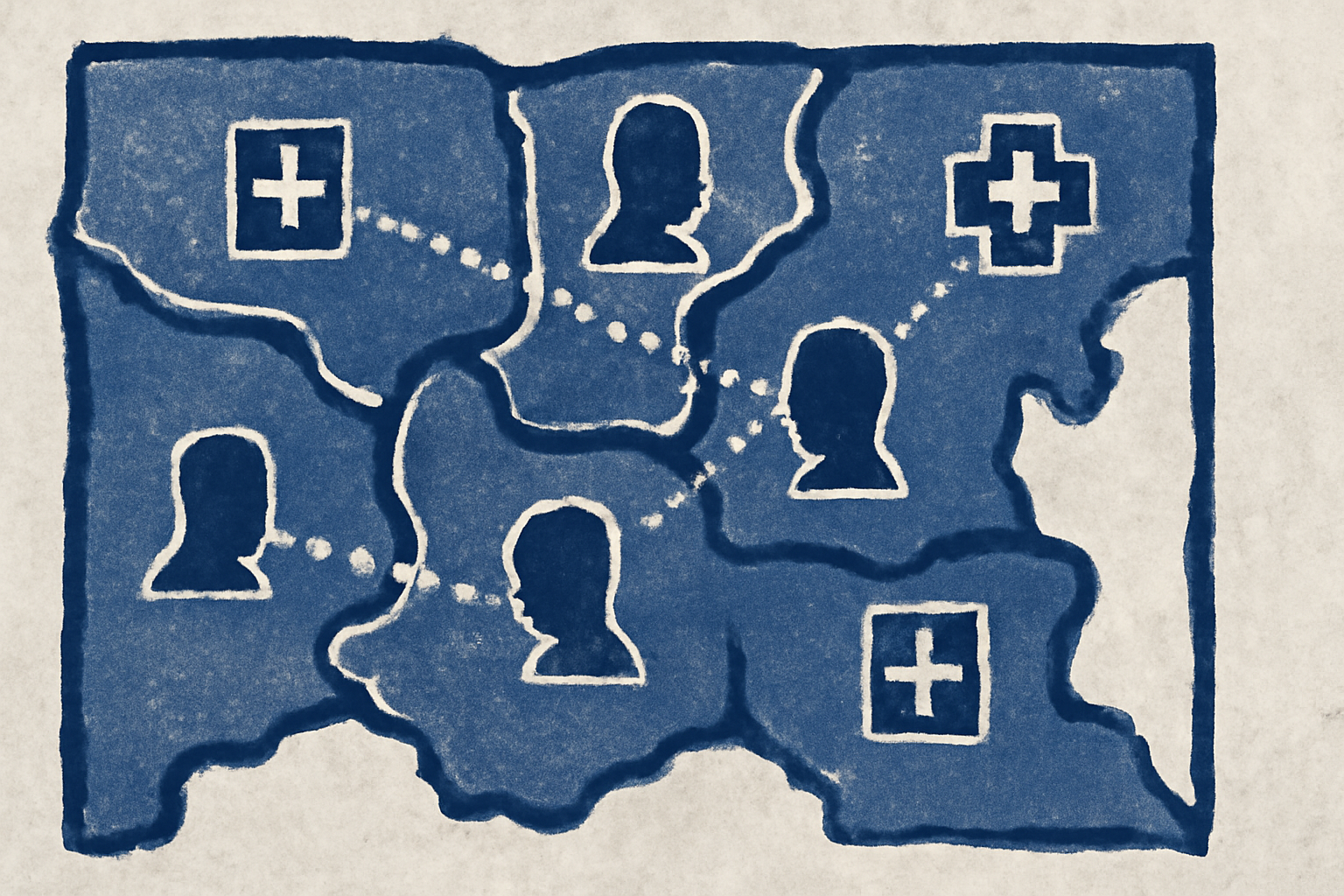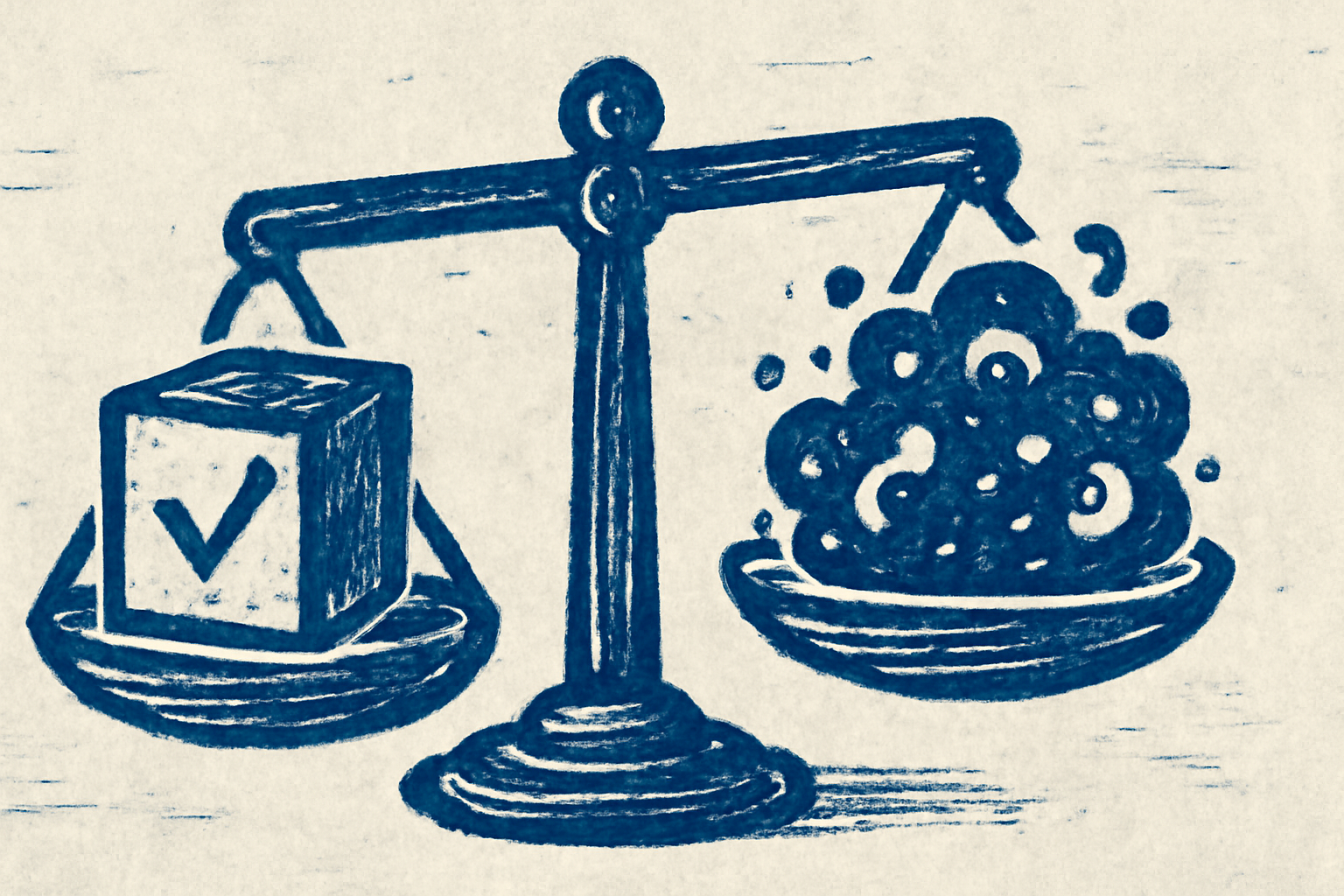
The deterministic vs probabilistic choice for patient matching is one of the foundational decisions in an MPI deployment. It shapes how your matching engine behaves, what kind of operations team you need to run it, and how the clinical-safety story plays out under audit.
This walkthrough pulls apart the practical differences and tells you which approach fits which kind of healthcare deployment. For FHIR background reading, the broader catalog covers the surrounding ecosystem.
The Short Answer
Deterministic matching declares two records the same only when they share an exact identifier or demographic combination. Probabilistic matching scores demographic similarity and declares a match above a tuned threshold.
If your data ecosystem has reliable, well-managed identifiers and clean demographics, deterministic matching is simpler, more auditable, and adequate. If your data ecosystem is messy (multiple source systems, demographic drift, missing identifiers), probabilistic matching is necessary even though the operational story is harder.
What Each Approach Actually Gives You
Deterministic matching gives you certainty and auditability at the cost of recall. Every match decision is reconstructable from a deterministic rule, but you will miss matches where the underlying records share a person but differ in any specified field.
Probabilistic matching gives you recall at the cost of operational complexity. You catch more matches in the messy cases, but each match decision depends on a tuned threshold that has to be maintained as your data evolves, and every match has a confidence score rather than a yes-or-no answer.
The technology underneath each is fundamentally different; production MPIs usually combine both with deterministic checks first and probabilistic fallback.
Where the Choice Actually Tips
A few specific factors push deployments toward one approach or the other:
- Identifier quality. Well-managed MRNs and national IDs make deterministic viable; missing or drifting identifiers force probabilistic.
- Source system count. One or two source systems with consistent data formats work for deterministic; six or more sources with varying formats need probabilistic.
- Operations team size. Probabilistic matching requires a team that can review and resolve unsure cases; deterministic does not.
- Clinical-safety posture. Deterministic is easier to defend in safety reviews; probabilistic requires more documentation of threshold-tuning decisions.
Most teams underestimate the operations cost of probabilistic matching. The unresolved-case queue grows quickly as patient population grows.
Which Approach for Which Hospital
Single-source clinical deployments with strong identifier discipline (clean MRN, single EHR) can run deterministic. Multi-source health system deployments with messy demographics need probabilistic. Cross-organization data sharing with no shared identifiers usually needs probabilistic with privacy-preserving techniques.
For the algorithm catalog rather than the strategy comparison, Top 7 patient matching algorithms for healthcare IT walks through the algorithm options.
For the specific tooling that handles edge cases like address duplicates, 5 patient matching tools that handle address duplicates right covers the tools that deal with this well.
How to Decide for Your Deployment
Take an honest look at three things: the cleanliness of your demographic data, the number of source systems feeding the MPI, and the size of the operations team you can dedicate to match resolution. If two of those three point toward messy and large, probabilistic is necessary. Otherwise deterministic is enough.
Most production deployments end up combining both, with deterministic checks running first for the easy cases and probabilistic fallback handling the rest.
Sources
- Patient $match operation specification (algorithm-agnostic baseline) - HL7 FHIR R5
- Patient Matching IG (covers both deterministic and probabilistic) - HL7 build.fhir.org
- Scaling Patient Identity Solutions (deterministic vs probabilistic context) - HL7 Blog, 2024