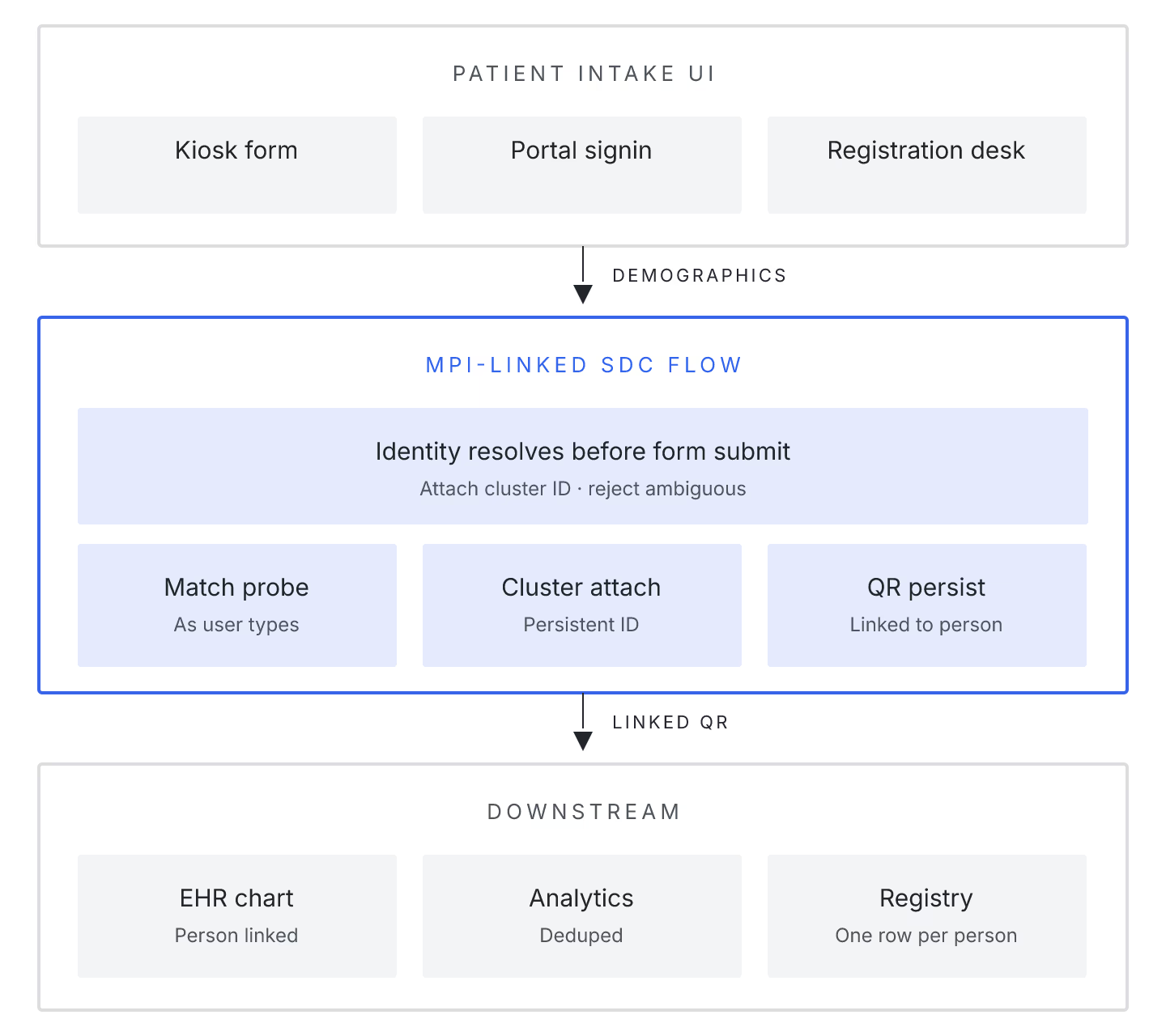
When patient intake forms feed a Master Patient Index, the flow from Questionnaire answers to Patient identity resolution is where most integration bugs live. SDC (Structured Data Capture) provides the primitives, but connecting them to MPI requires deliberate design.
Pre-intake identity capture. Before the clinical form starts, the intake flow needs enough identity data to run MPI candidate scoring — usually name, date of birth, address, and one or more identifiers. This lives in a Patient resource that gets created (or matched) before the clinical Questionnaire is filled. The SDC IG's pre-population extension covers pulling this data into the Questionnaire so patients don't retype it.
Match confidence gating. If MPI matching produces a candidate but confidence is below threshold (say 85%), the intake system should ask a disambiguating question — usually the last four SSN digits or a security question. Skipping this step is where patient chart mergers become chart splits.
QuestionnaireResponse subject binding. The completed QuestionnaireResponse's subject.reference must point at the matched (or newly-created) Patient resource. Any drift here — pointing at a stale Patient ID, or creating a new Patient when one existed — corrupts the downstream chart.
Post-intake reconciliation. For high-volume intake (>1000/day), some percentage of Patient creations will be duplicates that surface later. Automated deduplication jobs should run nightly, and merge candidates should be reviewed by a HIM analyst before commit. The US Core Patient profile supports Patient.link for representing merges without losing history.
Design decisions and their downstream impact
| Decision | If done right | If done wrong |
|---|---|---|
| Pre-intake MPI match | Fewer duplicates, cleaner chart | Chart splits and merge queues |
| Confidence threshold | 90-95% patient charts land correctly | Silent misassignment |
| Disambiguation question | Blocks the ~5% ambiguous cases | Skipped → downstream cleanup |
| Post-intake dedupe | Nightly cleanup catches strays | Duplicates accumulate |
| Subject reference discipline | Chart integrity | Detached orphan QuestionnaireResponses |
SDC-driven intake with MPI feedback is one of the highest-impact patterns for reducing downstream data cleanup — but requires the design work upfront, not a bolt-on afterthought.